

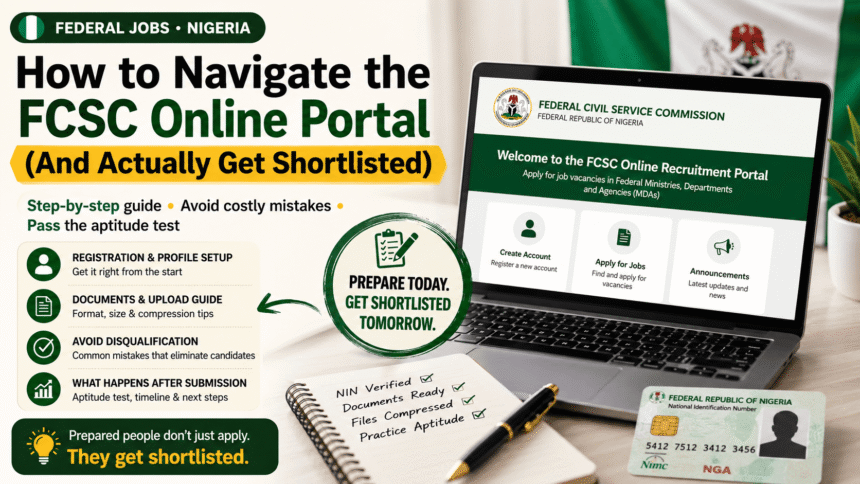
The FCSC portal (fedcivilservice.gov.ng) is Nigeria's gateway to federal ministry jobs. This post walks you through registration, document upload, and what happens after submission including the aptitude test most applicants never prepare for.
Source: FCSC
The first time I helped my cousin Abdulrahman apply for a federal job in 202, we spent three full hours on the FCSC portal and accomplished absolutely nothing useful. Not because we weren’t smart we just had no guide. Every tab felt like a trap. Every error message felt personal. We eventually submitted something, but neither of us was confident about what we’d actually done.
That experience is exactly why I’m writing this post. Because I’ve seen too many qualified Nigerians people with first-class degrees, strong CVs, and real ambition fail to get shortlisted not because they lacked merit, but because they couldn’t navigate a government portal. If that’s been you, let’s fix that today.
What the FCSC Actually Does (And Why It Matters to You)
The Federal Civil Service Commission is the body responsible for recruiting, promoting, and disciplining workers across Nigeria’s federal ministries, departments, and agencies the MDAs. If you want to work in a core federal ministry, not a parastatal, not a state agency, but a ministry under the federal government, then the FCSC is almost certainly the door you have to walk through.
Their recruitment exercises don’t open every single year, but when they do, the positions are real. Salaries follow the Consolidated Public Service Salary Structure (CONPASS), and the benefits pension, health insurance, and the kind of job security that most private sector roles in Nigeria simply cannot offer are genuine. So yes, understanding their portal properly is worth your time.
Finding the Correct Portal — This Step Can Save You from a Scam
The official FCSC website is fedcivilservice.gov.ng. I say this clearly because there are fake, cloned sites that look nearly identical to the real thing and they exist purely to harvest your personal data or collect so-called “processing fees.” The real FCSC portal has never, to my knowledge, required applicants to pay anything during the application process.
Important: When recruitment is active, the portal link is published directly on the official FCSC homepage. Bookmark that URL from the source. Do not follow recruitment links shared in random Facebook groups or WhatsApp forwards without first verifying them against the official site.
Registration and Profile Setup — First Impressions Count Here Too
Once you’re on the right portal, creating your account is your first real task. Use an email address you check regularly shortlist notifications and test invitations land there, and missing one because you used a dormant Yahoo account from secondary school is a mistake you don’t want to make.
During registration, you’ll typically be asked for your National Identification Number (NIN), so have it ready before you start. Once your email is verified and you’re logged in, you’ll land on a dashboard where you fill in personal details, educational qualifications, and work experience. Take your time here. If the name on your portal profile doesn’t match your WAEC certificate or your degree exactly even a missing middle name that discrepancy can flag your application during document screening and knock you out before a human ever reads your CV.
Uploading Documents Without Making Costly Errors
The portal enforces strict file size and format requirements, usually PDFs or JPEGs under a specific size limit. Many people hit walls here because they’re trying to upload a 12MB scan of their university certificate. Use a free tool like Smallpdf or ILovePDF to compress your files before you even attempt to upload them.
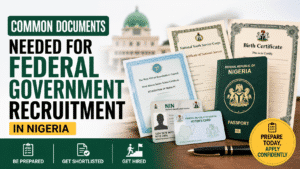
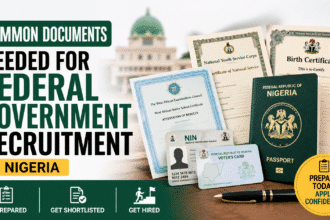
The documents typically required include your O’Level result, your degree certificate or statement of result if your certificate is still being processed, your NYSC discharge or exemption letter, a birth certificate or sworn declaration of age, and a passport photograph with a plain white background. For a full, detailed breakdown of everything you need to have ready, my earlier post on common documents needed for federal government recruitment in Nigeria covers it all in one place go read it before you come back here.
What Nobody Tells You About FCSC Applications
Here is the part most blogs skip entirely: submitting your application is just the beginning, not the finish line.
After submission, shortlisted candidates are typically invited for a computer-based aptitude test. This test covers verbal reasoning, quantitative aptitude, and sometimes current affairs. Candidates who actually prepare for this not those who assume their degree is enough are the ones who make it through to the oral interview stage.
Also be aware that FCSC recruitment cycles can stretch six to eighteen months from application to final posting. If you apply and hear nothing for three months, that doesn’t automatically mean rejection. Stay patient and stay off the anxiety forums.
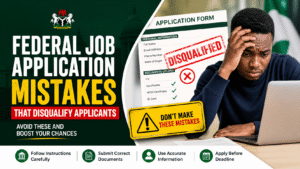
One more uncomfortable truth: many quiet disqualifications happen because of application errors, not qualification gaps. Mismatched names, wrong qualification codes, a transcript uploaded to the wrong field these seem like minor issues but they are elimination triggers. Before you hit submit, read my post on federal job application mistakes that disqualify applicants it could save your application.
Your Action Plan Before the Next Recruitment Opens
- Visit fedcivilservice.gov.ng today and bookmark the official page not when recruitment opens, now.
- Confirm your NIN is active and tied to your correct date of birth via the NIMC portal or any NIMC office.
- Gather and scan all your academic credentials now, while there’s no deadline pressure crowding scanners and cybercafés.
- Compress every document to under 500KB using Smallpdf or a similar free tool. Test-upload one to make sure the format is accepted.
- Create your portal account with a reliable email address, and keep your login credentials somewhere you won’t lose them.
- Start practising verbal and quantitative reasoning consistently even in months when recruitment isn’t open. The test comes fast when it comes.
Federal jobs in Nigeria are competitive, yes. But a significant number of people who don’t make it aren’t losing to more qualified candidates they’re losing to more prepared ones. Prepared people read the guidelines. They verify their portals. They compress their files. They show up to the aptitude test having actually practised. You’ve already started by reading this post. Now take the next step and share this with someone in your circle who has been asking about federal jobs and doesn’t know where to begin. That person needs this more than they know.