



Nigerian students studying abroad can legally work part-time in most countries (up to 20 hours/week during term). The easiest jobs to get include campus roles (library, IT desk), food service and retail (McDonald's, Tesco), online tutoring via platforms like Tutorful or Superprof, freelance work on Fiverr/Upwork, and care work in the UK and Australia. The biggest barrier isn't opportunity it's mindset. Sort your tax number first, tailor your CV to local standards, and start applying in your first week. Don't wait until you're broke.
Source: EduJobs Africa
My friend Chukwuemeka called me from Canada at 11pm on a Tuesday, not to gist, but to ask me one question: “Musa, how do I eat this month?”
He had just started his Master’s program at the University of Manitoba. His scholarship covered tuition. It did not cover jollof rice. His parents had sent what they could, but the naira had taken another beating, and what converted to $200 CAD was supposed to last him three weeks. It didn’t.
I’m telling you this because nobody prepares Nigerian students for the financial reality of studying abroad. The Instagram posts show the campus, the snow, the passport. They never show the empty fridge at week two.
This post is for the Chukwuemeka who is reading this right now whether you’re already abroad or planning to go. These are real part-time jobs that Nigerian students are actually getting in countries like Canada, the UK, Germany, and Australia. Not theory. Names have been changed, but the stories are real.
First, Understand Your Work Rights as a Student
Before anything else, you need to know what your student visa allows. This is where a lot of Nigerian students get into trouble not because they’re lazy, but because nobody explained the rules clearly.
In Canada, international students on a valid study permit can work up to 20 hours per week off-campus during academic sessions, and full-time during scheduled breaks. In the UK, Tier 4 (now called Student Route) visa holders are typically allowed 20 hours per week during term time. In Germany, international students can work 120 full days or 240 half-days per year. In Australia, student visa holders (subclass 500) can work up to 48 hours per fortnight during semester.
These rules change, and they change quietly. Always verify on the official immigration website of whatever country you’re in before accepting any job. I cannot stress this enough one visa violation can end your entire journey abroad.
Campus Jobs: The Easiest Starting Point
The first job Chukwuemeka eventually got was right on his university campus as a library assistant. He found it through his school’s student employment portal two weeks after I told him to stop searching on Google and start searching inside his own institution.
Most universities abroad have dedicated job boards for student employment. These roles library assistant, IT support desk, campus tour guide, research assistant, residence advisor are designed specifically for students. The hours are flexible, the supervisors understand exam season, and there’s no commute. For a fresh arrival still adjusting to a new country, this is gold.
The pay is modest (usually around minimum wage), but the experience builds your local CV, and Nigerian students who are articulate and hardworking tend to stand out in these settings. I’ve seen students get promoted from library assistant to department supervisor within a year.
Food Service and Retail: The Most Available Jobs
Walk into any McDonald’s, Tim Hortons, Subway, or Tesco near a university town and ask how many staff members are international students. The answer will surprise you.
Food service and retail are the backbone of international student employment abroad. The barrier to entry is low you don’t need prior experience, just reliability and a willingness to show up. In Canada and the UK especially, these jobs often pay at or above minimum wage, and minimum wage in those countries is not the same as minimum wage in Nigeria.
A Nigerian student I know in Birmingham works four shifts a week at a Tesco Express near her campus. She makes roughly £400–£450 a month from that job, which covers her rent contribution and feeding. She doesn’t love it, but she respects it.
Don’t let pride be the enemy of your survival. A lot of Nigerian students abroad refuse these jobs because they feel beneath them. Then they call their parents at midnight asking for wire transfers. The choice is yours.
Tutoring and Academic Support: The Underrated Option
Here’s something many Nigerian students don’t realize: the academic pressure you survived back home WAEC, JAMB, multiple entrance exams, federal university competition made you quietly exceptional at certain subjects.
Mathematics, physics, and economics tutoring are in high demand abroad, especially in secondary schools and tutoring centers. Platforms like Tutorful (UK), Tutor.com (US/Canada), and Superprof (available in multiple countries) allow you to register, list your subjects, and connect with students who need help.
The pay per hour for tutoring often exceeds what you’d earn in retail. A student in Dublin I mentored charges €25 per hour tutoring Leaving Certificate maths. She works six hours a week and earns more than her friends doing double the shifts at a restaurant.
If your English is strong and your subject knowledge is solid, tutoring is the smartest part-time path for Nigerian students abroad.
Remote and Online Work: Earn in Dollars Without Leaving Your Room
This one changed the game for a lot of people I know. The fact that you’re studying abroad doesn’t mean all your income has to come from that country.
Freelance platforms like Fiverr, Upwork, and Toptal allow you to offer services graphic design, content writing, video editing, social media management, virtual assistance to clients anywhere in the world. If you have a skill, there is a market for it.
The critical thing here is understanding whether online freelance work counts against your study permit hours. In most countries, work done for clients outside your host country falls into a grey area. Some immigration lawyers argue it doesn’t count as “working in” the country. But this varies by jurisdiction, and you must get clarity before you start. Ask your school’s international student office. Don’t assume.
What I will say is this students who built online income streams before travelling abroad were far less financially stressed than those who arrived hoping to figure things out. If you’re still in Nigeria reading this and planning to travel, start your freelance profile now.
Healthcare and Care Work: A Growing Opportunity
Across the UK, Canada, and Australia, there is a persistent shortage of care workers, personal support workers, and healthcare assistants. Many of these roles offer part-time and weekend hours and actively recruit international students.
The UK’s NHS and private care sector in particular have been advertising for support workers for years. The role involves supporting elderly or disabled individuals with daily activities. It is demanding work emotionally, but it pays well above minimum wage in many regions, and some employers offer free training and certification.
A few Nigerian nursing students I know in the UK took care work jobs while studying and found that the practical experience actually supported their academic learning. It’s not for everyone, but if you have patience and empathy, it’s worth looking into.
What Nobody Tells You About Working Abroad as a Nigerian Student
Here is the uncomfortable truth: the biggest obstacle most Nigerian students face is not finding a job. It’s their own mindset.
We grew up in a society where certain jobs are associated with failure. Washing dishes is for people who didn’t go to school. Stacking shelves is embarrassing. I heard these things growing up too.
Abroad, that thinking will cost you. The student working at the supermarket checkout is often the same one who graduates, gets a work permit, and builds a life. The one waiting for a “professional” opportunity that matches their self-image sometimes goes broke, gets into debt, or has to return home before finishing their degree.
Nobody will judge you for working a customer service role in Canada or a café in Germany. In fact, local employers often respect the hustle. What they will judge quietly is someone who shows up entitled and unprepared.
Do the work that’s available. Build your local reference. Improve your accent if you have to. Keep your grades up. The bigger opportunities come after you’ve proven you’re reliable in the smaller ones.
Practical Steps to Get Your First Part-Time Job Abroad
1. Start before you land. Research the job market in your destination city before you travel. Know the minimum wage, know the major employers near your campus, and know which platforms are used locally for job listings (Indeed, LinkedIn, Gumtree in the UK, Workopolis in Canada).
2. Sort your documentation first. Get your SIN (Canada), NI number (UK), or Tax File Number (Australia) as soon as you arrive. Without this, many employers cannot legally pay you.
3. Use your university’s career services. Most universities abroad have career centers that help international students with CV writing, job placement, and work permit guidance. Use this resource it’s included in your tuition.
4. Tailor your CV to local standards. A Nigerian CV and a Canadian CV are not the same document. No passport photo. No date of birth. Clean, one-page format focused on skills and experience. Ask your career office to review it.
5. Apply early and apply widely. Don’t wait until you’re broke. Apply in your first or second week. The earlier you start, the more options you have.
6. Be honest in interviews. If you’ve never worked in retail before, say so and tell them what makes you reliable, fast to learn, and worth the training. Nigerian students who are honest and confident tend to get hired.
You Didn’t Travel This Far to Struggle Silently
I think about Chukwuemeka every time I write about this topic. He eventually got that library job, then picked up a tutoring side income, graduated with a strong GPA, and just last year secured a full-time role in his field in Winnipeg.
He didn’t have a rich uncle. He didn’t have connections. He had information and the courage to act on it quickly.
If you’re a Nigerian student abroad right now, reading this at midnight wondering how to manage next month please hear me say this: the resources exist, the jobs exist, and you are more employable than you think. You just have to move.
And if you haven’t travelled yet but you’re planning to prepare financially and psychologically before you board that flight. Learn a skill you can freelance. Save what you can. Research the job landscape of your destination city. Arrive ready to work, not just study.
The degree is important. But the discipline you build working part-time through a foreign winter that shapes a different kind of person entirely.
More Updates

The Hidden Costs of Studying Abroad Nigerians Don’t Expect
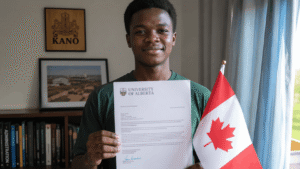
How a Student From a Poor Family in Kano Won a Full Scholarship to Study in Canada

The Scholarship Application Mistake 90% of African Students Make (And How to Fix It)

Scholarships You Can Apply for With Only WAEC in 2026

Study Abroad Without IELTS: What Schools Don’t Tell You